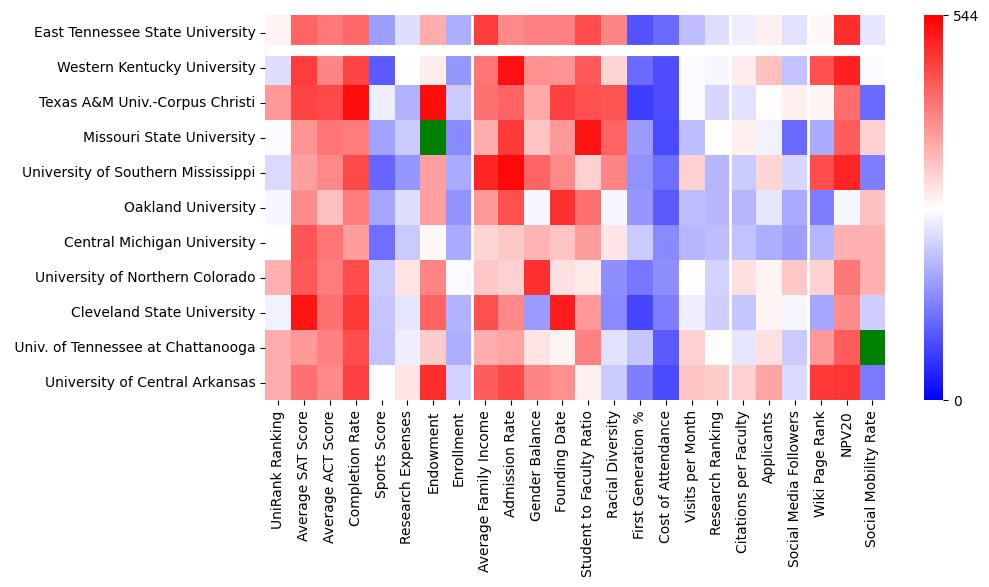
East Tennessee State University (ETSU) was established in 1911 as East Tennessee State Normal School, originally serving as an institution for training teachers. Located in Johnson City, Tennessee, it has evolved over the years into a significant public research university with a comprehensive array of undergraduate, graduate, and professional programs. With over 14,000 students, ETSU is recognized for its commitment to community engagement, cultural diversity, and fostering a supportive learning environment. The university is part of the State University and Community College System of Tennessee and maintains a scenic campus nestled in the Appalachian Mountains.
What sets ETSU apart is its strong emphasis on health sciences and its Appalachian focus, which permeates many of its programs and initiatives. The university is home to the Quillen College of Medicine, one of the top medical schools in the nation for rural medicine and primary care. Additionally, the Bill Gatton College of Pharmacy and the College of Public Health are key contributors to the university's outstanding reputation in health-related fields. ETSU also celebrates its Appalachian heritage through various cultural programs and research initiatives that aim to preserve and promote the history and culture of the region.
Academically, East Tennessee State University offers a robust selection of programs with notable strengths in health sciences, education, and business. The College of Nursing is highly regarded and offers a range of undergraduate and graduate programs, including a Doctor of Nursing Practice (DNP). The College of Business and Technology provides students with diverse opportunities in fields such as digital media, accounting, and management, with several programs receiving specialized accreditation. ETSU's dedication to research is evident in its numerous research centers and institutes, which provide students with hands-on experience and contribute to advancements in various fields.
Despite its many strengths, ETSU faces some challenges, such as limited national recognition compared to larger, more established universities. While the university offers a wide range of programs, certain departments may have fewer resources and less faculty than more prominent institutions, potentially affecting research opportunities and student-to-faculty interactions in some areas. Additionally, like many universities, ETSU is continually working to enhance its facilities and infrastructure to keep pace with growing enrollment and evolving educational needs. Nevertheless, ETSU remains a vital educational institution that continues to serve its students and the region effectively.